Should You Put Your Prices on Your Website? Why "PM for Price" Is Costing You Sales
Ang sagot, nang tapat: oo — ilagay mo ang presyo mo kung saan nakikita ito ng customer. May tatlong pagkakataon lang kung kailan hindi mo dapat ilagay, at nasa ibaba ang mga iyon, dahil hindi ito isang absolutong payo.
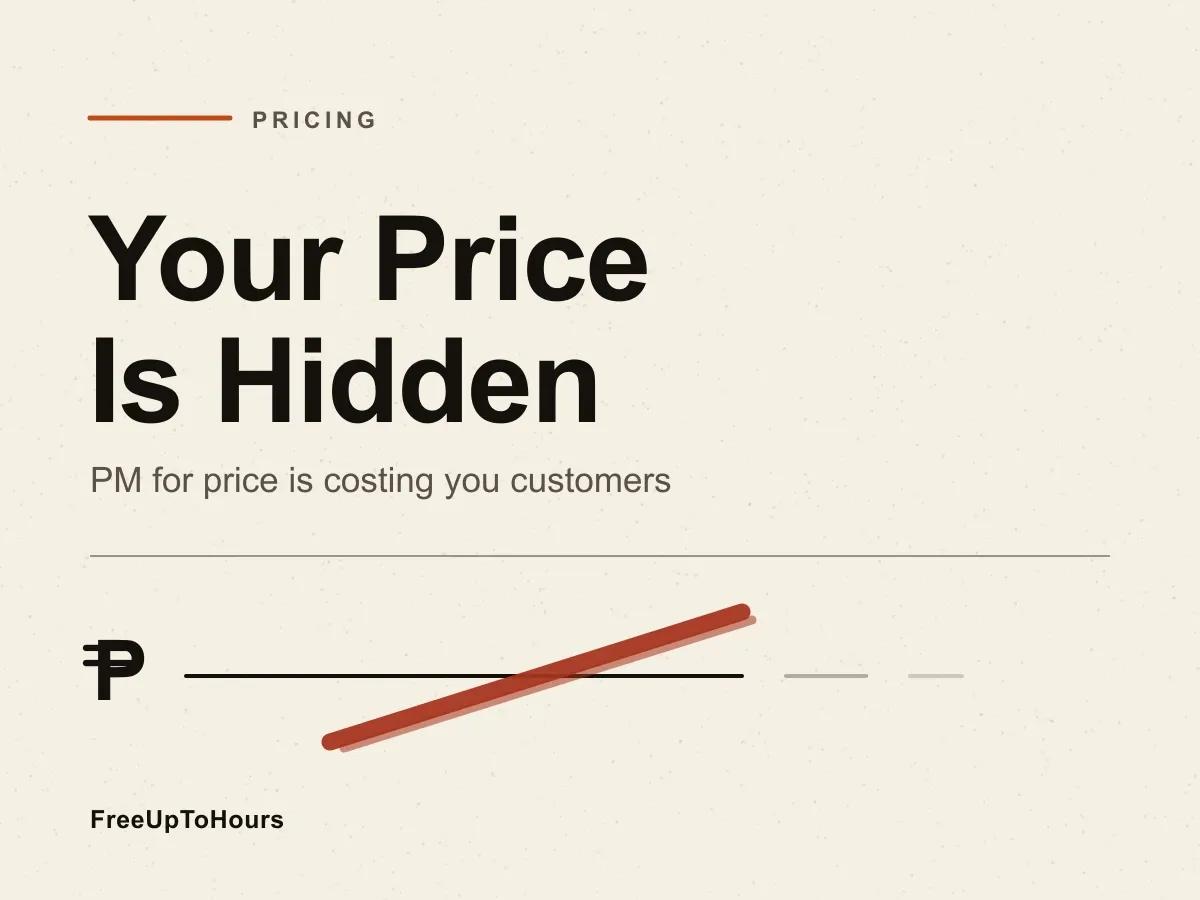
For years, "PM for price" has been the default answer for almost every small business here. It feels safe. It feels like you are protecting your margin. But you are not protecting your margin — you are just moving the negotiation into your inbox. And there, you answer the same question thirty times a day, while everyone too shy to ask quietly disappears.
The Real Cost of "PM for Price"
Think about the customer searching for your service right now. Alam na niya ang budget niya. The only thing she wants to know is whether you fit inside it. So kung ang website mo, ang Facebook page mo, at ang ads mo ay lahat nagsasabing "PM for price," ano ang nangyayari? She has to message, wait, and ask — bago pa niya malaman kung kaya niya.
The person with money and urgency does not wait. Nagme-message siya ng tatlong negosyo, and the first one to answer with a clear price wins — hindi ang pinakamurang, hindi ang pinakamagaling. Ang pinakamalinaw. That is the whole game. And if she asks you and gets nothing until tomorrow, she is not angry at you. Wala na lang siya.
There is a second cost, and it is the more expensive one. Lahat ng nahihiyang magtanong — the ones who will not message because they feel awkward asking for a price — hindi mo sila kailanman makikita sa inbox mo. You do not know they left. Hindi sila nagreklamo. Umalis lang sila. And you cannot count the ones you never saw, kaya hindi mo maiisip na problema ito.
Why Hiding Your Price Feels Safe — and Is Not
Naiintindihan ko kung bakit tinatago. There are three common reasons, and lahat sila, may sagot.
Una: "My competitor will copy my price and undercut me." Ang totoo, alam na ng katunggali mo ang presyo mo. Tatawagan ka nila, magpapanggap na customer, at malalaman nila. The only person who does not know your price is your customer — ang taong dapat nakakaalam.
Pangalawa: "I will lose flexibility on price." Naiintindihan ko ito, at ito ang tanging dahilan na may tunay na bigat. But there is a middle path — below — na nagbibigay sa iyo ng flexibility nang hindi itinatago ang lahat.
Pangatlo, at ito ang hindi sinasabi ng kahit sino: "They will find out I am expensive and stop asking." Ito ang tunay na takot, at ito ang pinakamahal. Because if you believe you are too expensive, ang problema, hindi ang presyo — ang positioning. And you will never understand your positioning kung hindi mo kailanman nakikita ang reaksyon ng merkado sa numero mo.
- Ang "PM for price" ay hindi proteksyon. Ito ay pagpapaliban.
- Ang bawat "PM" na hindi mo sinagot agad ay isang taong nagtanong sa iba.
- Ang presyo na nakatago, hindi presyo. Ito ay negotiation na hindi mo pa pinasok.
What a Published Price Does for the Other Three Layers
Here is the part most owners miss: your price is not a separate decision. It touches all four layers — website, SEO, ads, and AI — and every one of them works better when your price is public.
| Layer | What a hidden price does | What a published price does |
|---|---|---|
| Website | Your highest-intent visitor — the one ready to buy — bounces to a competitor who showed a number. Walang conversion. | The price page becomes your strongest sales page. Ang taong pumunta doon, bumibili na — kailangan lang ng kumpirmasyon. |
| SEO | You rank for the question and then refuse to answer it. Nag-aaksaya ka ng ranking. Google and AI see a page that does not resolve intent. | You can own "magkano [service] Philippines" — mataas na volume, at lahat ng naghahanap, bumibili. Every one of them is a buyer. |
| Meta ads | You pay to start conversations with people who cannot afford you. Ang ad budget mo, napupunta sa tire-kickers. | The price in the ad filters before the click. Mas kaunting usapan, mas mataas ang kalidad — cheaper leads, same spend. |
| AI automation | Your bot answers "magkano po?" with "PM po tayo" — the single most useless automation ever built. | Your bot answers the exact price in three seconds, at 2 AM, sa Taglish. Iyon ang trabahong binayaran mo. |
That last row is the one that matters most. If you built an AI chatbot to answer your customers' questions, and its answer to the most common question of all — "magkano po?" — is "PM po tayo," why did you build it? The entire point of automation is answering the repetitive questions. And the price is the most repetitive question there is.
When You Should Not Publish a Price
This is not absolute advice, and these three businesses have a real reason. I have thought through all of them in my own work.
- Variable scope — when the price depends on the problem. My own example: "my car shakes when I brake" could be five different problems at five different prices. Kapag ganoon, may saysay ang "PM for price" — pero ang tamang gawin, magbigay ng range at diagnostic fee, hindi basta tago.
- Financing-dependent pricing — real estate. The price depends on cash, bank loan, Pag-IBIG, in-house, or rent-to-own. Dito, ang tamang sagot, hindi isang numero kundi isang computation. But even here, you can publish the computation.
- Genuinely custom builds — when every project truly has a different scope. Even here you can do something: publish a starting price and the factors that move it.
Notice the pattern: in all three, "PM for price" is not the answer. The answer is still transparency — a range, a diagnostic fee, or a computation. Ang tanging ipinagbabawal, ang walang sagot.
The Middle Path: Ranges, "Starting At," and Tiers
If you are not ready to publish an exact number, you do not have to jump straight to "PM for price." There is a ladder in between.
- "Starting at ₱X" — a clear anchor with room above it. This is the easiest first step.
- Tiered pricing — three packages with clear differences. The customer chooses instead of asking.
- A range with a reason — "₱8,000 to ₱15,000, depending on pages and features." The reason builds trust; it does not weaken it.
- A published diagnostic or consultation fee — when scope is genuinely variable, the fee signals commitment.
The principle underneath all of it: your customer needs a number to decide. Kahit range lang, numero pa rin iyon. Ang "PM for price," hindi numero. Iyon ang pagkakaiba.
What Publishing My Own Numbers Did
I am not teaching something I do not do. Every price I charge is public, and here is what happened.
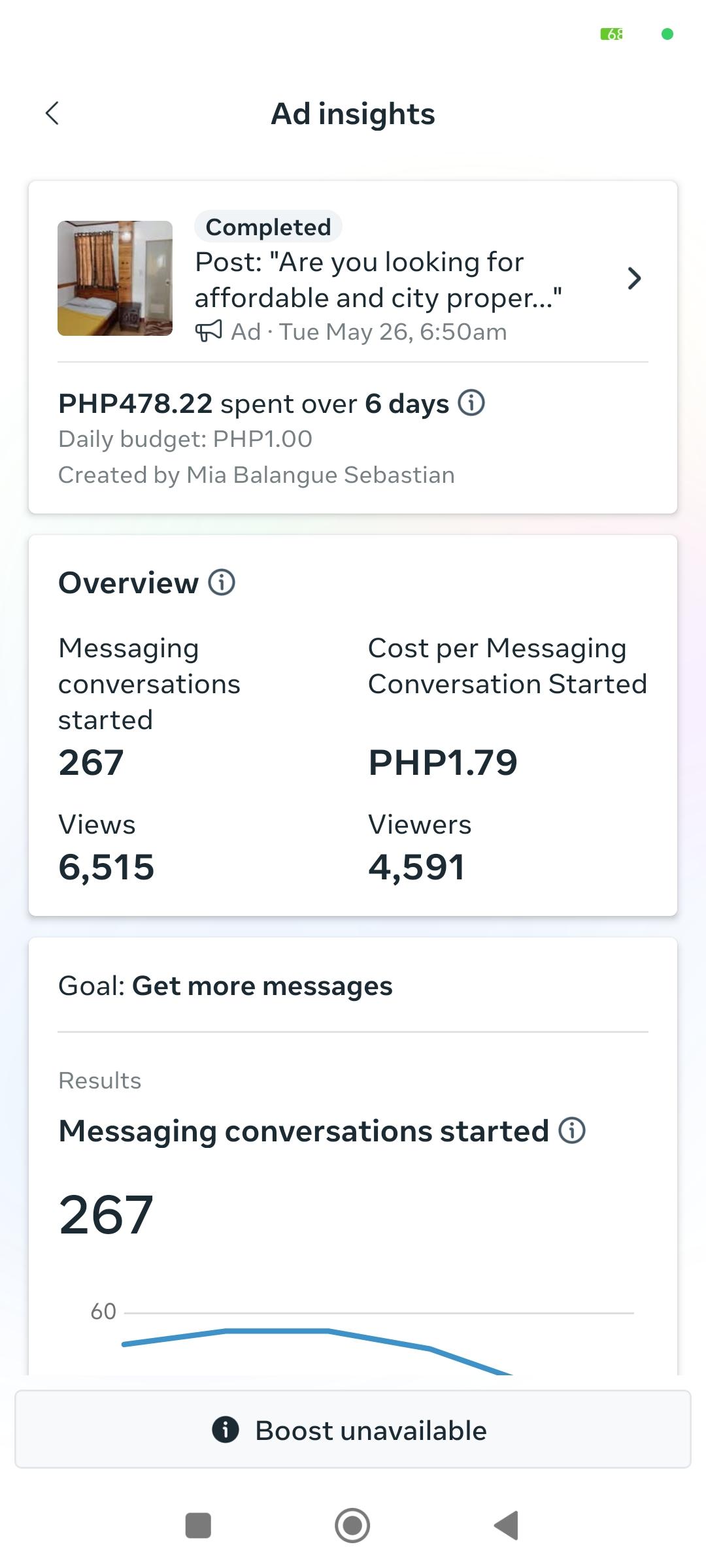
My business, 15 rooms in Baguio, went from 40 to 100 percent occupancy — same rooms, same prices, same staff. My inbox now handles 20,000 to 30,000 messages a month. One month of that cost $6.85 on the model that answers guests — 25,361 requests. And my ads spent ₱478.22 to start 267 Messenger conversations, ₱1.79 each.
The important part: I did not win more customers by lowering my price. Nananalo ako sa pagiging malinaw. The person with a budget stops wasting time asking. The person without one stops messaging — and that is good, because my time is limited. A clear price does not just sell. It filters.
Who Should Not Do This
If your price is not clear to you yet — if you do not know your true cost per project — do not publish it yet. Because once it is out and it is wrong, you get hurt twice: with the customer who expected it, and with your own margin.
And if your pricing is based on "whatever the customer can afford" rather than the value of the work, transparency will be heavy for you. Pero sasabihin ko ito nang tapat: that model is not pricing. That is guessing. And guessing does not build a business that lasts.
The One Thing to Remember
A hidden price is not protection. It is delay — and what you pay for it is everyone who left without you ever knowing. Your customer needs a number to decide. Give them a number. Kung variable talaga, bigyan mo ng range. But do not make them "PM" for something you could answer right now. A range protects the seller. A published number respects the buyer. Kaya mo 'to.
Why I Do Not Chase Clients — and What That Does to My Pricing
The posture side of the same question — how not needing the deal is what lets you hold the number you published.
How Much Does a Website Cost in the Philippines? An Honest Breakdown
Every number I charge, published — including the renewal price the agencies hide until month thirteen.
AI Chatbot Philippines: What They Cost and What They Actually Do
The layer that makes a published price pay off — a bot that answers "magkano po?" in three seconds, at 2 AM, sa Taglish.
Frequently asked questions
Should I put my prices on my website in the Philippines?
Will my competitors see my prices and undercut me?
How do I handle customers who only ask "magkano po?"
What if my price is genuinely different for every customer?
Does publishing prices reduce my bookings?
When should I NOT publish my prices yet?
Want the same system for your business?
I'll set up AI automation for your business — just like I did for mine.