Can AI Make a Whole Game? My Honest Answer After 16 Hours Building a Filipino JRPG
No — the honest answer is that AI cannot make a whole game on its own. It can make a beautiful world, art that stops you mid-scroll, and systems that feel alive, and it can do it fast. What it cannot do is hand you a finished game from one prompt. I learned that across 16 hours earlier this week, working on my own first JRPG.
Two days ago I started The Thirteenth Tide, a 21-chapter Filipino JRPG, with ChatGPT Astra 6 and DeepSeek V4.1 Flash. Sixteen hours later, Chapter 1 is done. Chapter 2 starts tomorrow. My characters are Matu Bato James, a Brawler, and Olivia Miller, a Spellweaver, both at level 19. And I say all of it plainly: I am not a game developer. I am a small business owner from Baguio who automated his own business so completely that he finally has time to make a game.
The 16 Hours That Started a 21-Chapter Game
It began the day ChatGPT Astra 6 came out. I tested it on games right away, and the results were good enough that I stopped testing. That was the moment: two days ago, this stopped being an idea and became the project.
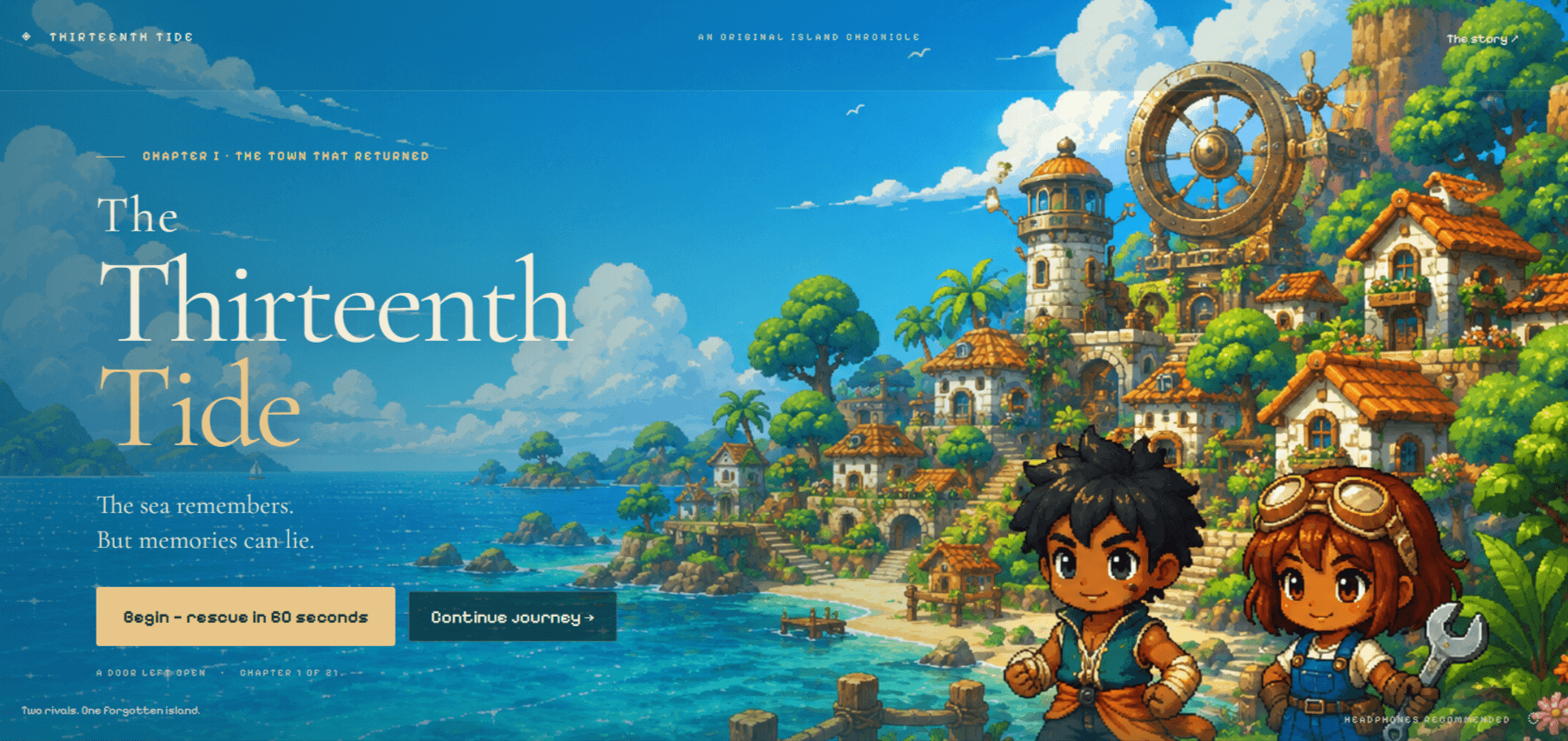
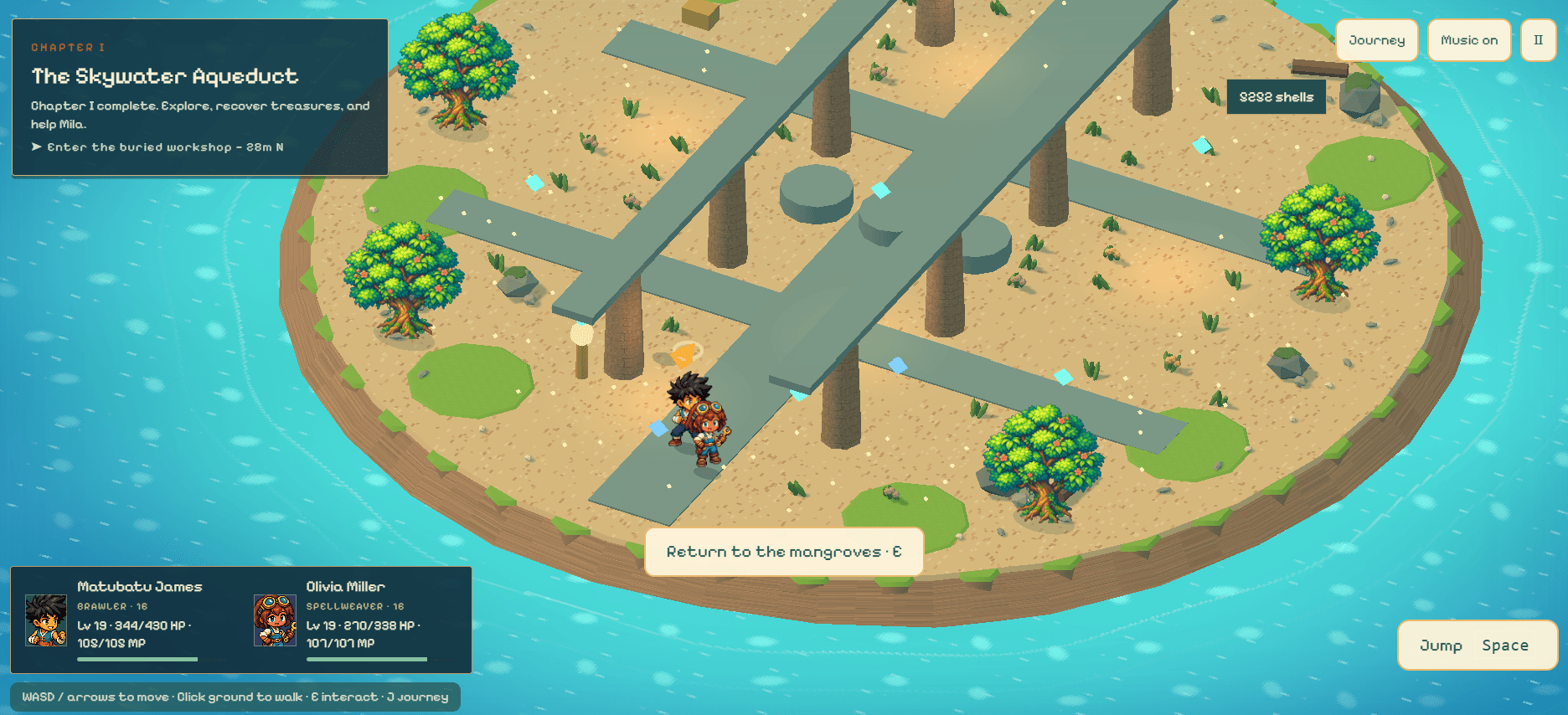
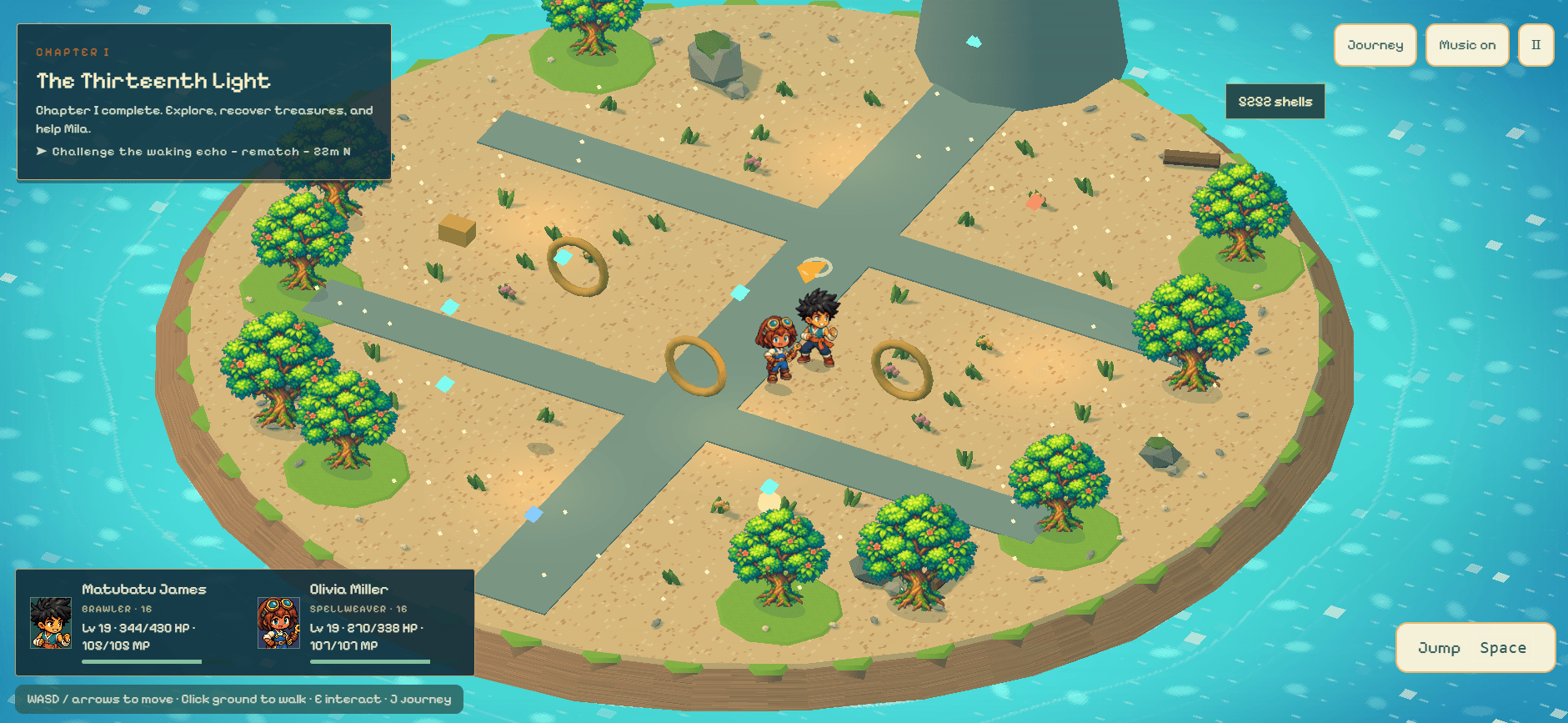
The Thirteenth Tide is an island chronicle. Its tagline is "The sea remembers. But memories can lie." Chapter 1 is called The Town That Returned, and the plan is 21 chapters. In 16 hours I finished Chapter 1 — the islands, the quest lines, the world art, the two playable characters. Then I spent the rest of tonight restructuring everything I just made. That part, nobody puts in their demos.
The One-Shot That Looked Finished
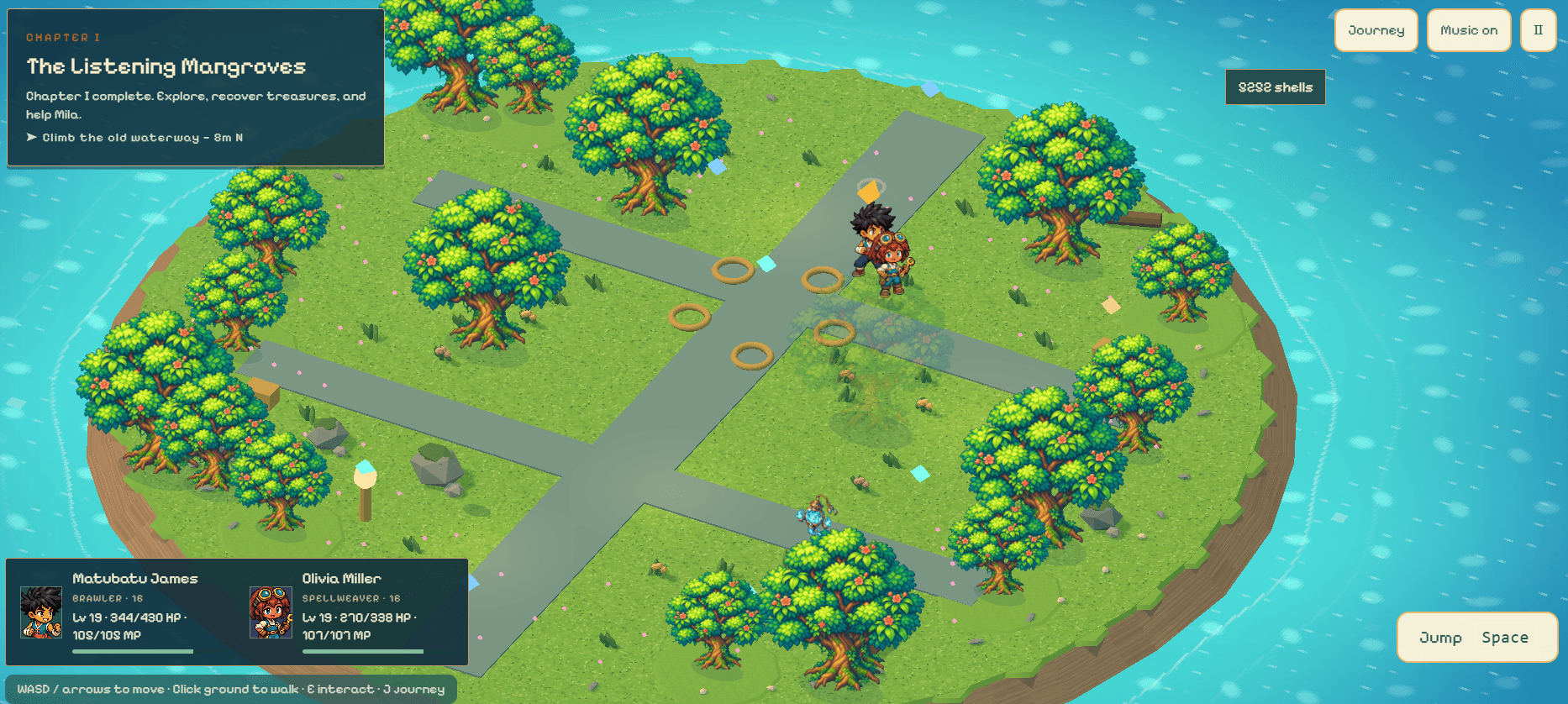
The mistake every AI game post hides is the one-shot. I gave Astra 6 the whole game idea in one prompt, and what came back looked like a finished game. The graphics were the best part of the project — the islands read like a proper JRPG. Then I played it. The gameplay was thin. Beautiful scene, shallow systems, nothing to actually do once the wonder wore off.
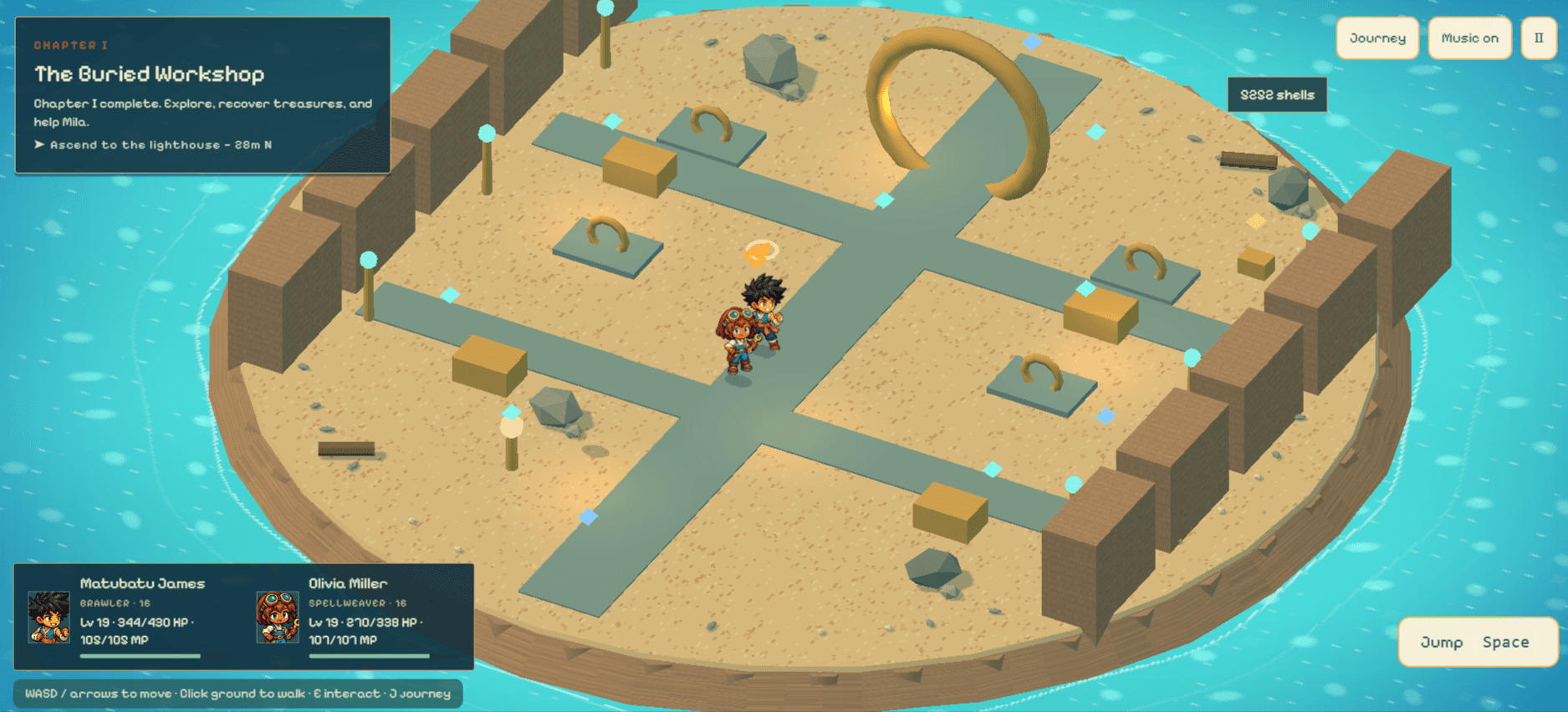
So I went back and added the gameplay by hand: skills, mechanics, the layers that make one island different from the next. That took most of the 16 hours. The lesson is simple and it is the whole point of this post: a one-shot prompt gives you a demo with great art. A whole game is built step by step, with AI doing the work and a human deciding what the work should be.
The Pattern: One Orchestrator, One Worker
After that first day, the routine wrote itself. The strongest model gets the jobs that need judgment; the cheap, powerful one gets everything that needs volume.
| Job in the game | What runs it | Why |
|---|---|---|
| One-shot prompts and overall orchestration | ChatGPT Astra 6, running through Codex | For the shot that sets the whole chapter, you want the highest model — direction is the job it is best at |
| Graphics, world art, everything visual | ChatGPT Astra 6 | The best-looking output I have ever gotten. It owns the art, full stop |
| Add-ons, gameplay systems, volume work | DeepSeek V4.1 Flash, running through my DeepSeek harness | Cost-efficient and genuinely powerful — the skills and mechanics got built here, in bulk |
| Final bug check on everything | Back to Astra 6 | Fresh eyes, highest judgment. It catches what the worker missed |
That is the whole craft: highest model for the big call, worker model for the grind, highest model again for the check. Two harnesses, one game. It is the same discipline I use on my business — match the model to the job, never the other way around.
The Cost: What Two Days Actually Runs Me
Astra 6 is not cheap, and I will not pretend it is. My ChatGPT bill runs about $20 a month, and the DeepSeek V4.1 Flash API is metered on top. DeepSeek is what makes this survivable for a solo builder — it does the workforce, the thousands of lines, the add-ons, for cents on the premium dollar. If I ran every pass on the premium model, the cost would eat the project before Chapter 3.
Who Should Try This — and Who Should Not
If you are a zero-dev — someone with no coding background and no AI habits — the honest answer is you still want the strong plan. The guidance you need is expensive, so the premium tier is the right call. That is $200 a month class, and it is worth it for what it teaches you.
If you are an advanced coder, or AI-literate like me after running my business on agents, here is the freedom you have earned: use the best model for any task, and mostly use it for performance and cost efficiency. I am building a 21-chapter game on $20 plus a Flash API. That trade is the entire reason I could start.
Who should not try this? Anyone who thinks one prompt should be enough, and anyone whose business is still the bottleneck. For a business owner, the order is the same as it has always been: use AI to automate your business first, because that machine pays for the rest. My cash flow comes from a ranch and a house in Baguio that run without me. The game exists because that machine runs. If you are still doing every step by hand, game dev is the wrong project. The same pattern applies to both.
Why This Is a Filipino Game
The game is in English — that is the honest current state, and I am not going to pretend otherwise. But The Thirteenth Tide is a Filipino game: made by a Filipino, for Filipinos, about the places and moods we grew up around. That choice matters more than language. Anybody can prompt a generic fantasy world with AI. Nobody can prompt my island, my town that came back, or my two rivals.
Being solo also matters, and I am honest about it: this is one person, with two AIs doing the typing. That is the whole point of the series of posts I write. The tools are only as good as the owner using them — and I am spending the hours my automation bought me, building rather than resting.
The One Thing to Remember
Use AI — and not just for games. Use it for developing, for building, for your job, and especially for your own business. That is what two days and 16 hours taught me: AI will not replace game developers, and it will not replace business owners either. It replaces the typing. The creativeness is still on you, and that is the part that makes the game yours.
No-Code Tools Are Dead for Me: Why I Build Everything in Code With AI Harnesses
The harness philosophy behind this build — Oracle, Codex, and my DeepSeek harness, and why owning the runtime is the whole point.
Which AI Model for Which Task? The Real Stack I Run My Business On
The full model-to-job map — the same match-the-model-to-the-job discipline I use for a 21-chapter game.
Business Process Automation in the Philippines: Stop Being a Prisoner of Your Own Business
The machine that bought me the 16 hours — automate the business first, and the game (or anything else) becomes possible.
Frequently asked questions
Can AI actually make a whole game?
Do I need the $200 ChatGPT plan to make a game with AI?
Is The Thirteenth Tide in Filipino?
Do I need to know how to code to do this?
Will AI replace game developers?
When will the game be done?
Want the same system for your business?
I'll set up AI automation for your business — just like I did for mine.