What I’m Actually Doing With AI in October 2026 (And Why My Friends Think I’ve Gone Off the Deep End)
A close friend of mine asked me over coffee last week:
I sat there for a second, trying to figure out how to explain that I haven't opened a vanilla chat box to "ask a question" in months.
To him, AI is still a novelty website where you type a prompt, wait three seconds, and get back an overly polite paragraph that sounds like a college intern trying too hard.
Meanwhile, behind the scenes of my business, AI is currently:
- Running 24/7 inquiry triage across customer channels, qualifying leads while I sleep.
- Writing, testing, and debugging production Node.js and Next.js backend code through custom harnesses.
- Running automated reconciliation scripts on operations that used to take three hours of spreadsheet gymnastics every weekend.
Here is what I’m actually doing right now to convert my business into an AI-first operation, the latest state of AI models as of late 2026, and why the gap between everyday users and AI-integrated businesses has never been wider.
1. What I’m Actually Doing on FreeUpToHours Right Now
When I say I’m "converting my business to an AI setup," I don’t mean I fired people or replaced my brain with a computer. I mean I systematically identified every repetitive, low-leverage task that used to steal my daylight and delegated it to purpose-built autonomous workflows.
Here is what running an AI-first business looks like today:
Moving From "Chatbots" to Autonomous Harnesses
In 2024, people were obsessed with prompt engineering: "Act as an expert marketer and write me a hook."
Today, that approach is ancient history. I don’t chat with models; I build harnesses.
- I run lightweight worker models via APIs that connect directly to my databases, Messenger webhooks, and local code environments.
- When a customer asks about room availability or service pricing at 2:00 AM, an AI worker doesn't just guess—it checks the live calendar, validates the rules, drafts the quote in natural language, and holds the lead until morning.
- If an edge case pops up (a refund dispute or an unusual custom request), it doesn’t hallucinate. It tags me, logs the context, and hands it off.
Reclaiming Real Hours
The name of this site is FreeUpToHours for a reason. Every automation I deploy has one single KPI: How many hours of manual grind did this give back?
If a tool saves 15 minutes a day answering the exact same five repetitive customer questions, that’s over 90 hours a year. Multiply that across invoicing, scheduling, content drafting, and bug fixes, and you realize you aren’t running faster on the treadmill—you’ve stepped off the treadmill entirely.
2. What’s Actually New in AI Models (October 2026 Check-In)
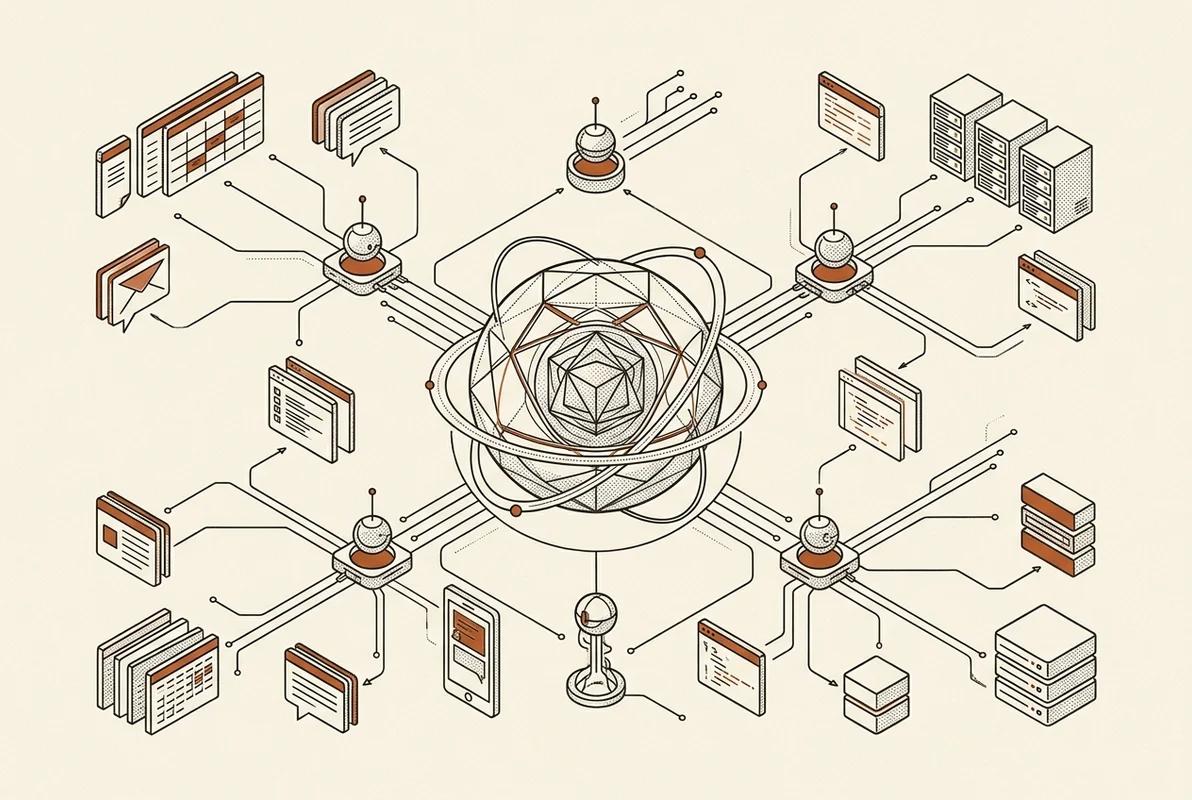
If you haven’t checked the news since early 2025, the AI landscape has completely restructured into a two-tier architecture: Heavy Planners and Sub-Second Workers.
| Tier | Representative Models | Role in Business Operations |
|---|---|---|
| Tier 1: Frontier Reasoning Planners (Architects) | Claude Opus 5.5, GPT-6.1 Sol | Designs workflows, creates system rules, architects backend logic, writes tests, and inspects complex edge cases. |
| Tier 2: Ultra-Fast Worker Models (Triage / Execution) | DeepSeek V4.1 Flash, Sonnet 5.5, Local SLMs | Sub-second API calls, database updates, 24/7 Messenger triage, lead logging, and automated reconciliation. |
1. Extended Reasoning as the Default
Models are no longer just predicting the next word. Frontier reasoning models (like the Claude 5.5 series and OpenAI's latest reasoning architectures) now spend compute time "thinking" before spitting out an answer. They plan multi-step workflows, anticipate edge cases, check their own logic, and write tests to verify their work before you ever see the output.
2. The Rise of Sub-Cent Flash Models
For a long time, running AI on every incoming customer message or backend event was cost-prohibitive. Today, models like DeepSeek V4.1 Flash and lightweight open weights run at near-zero latency for pennies per million tokens. This means small businesses can afford to put an intelligent filter on everything: classifying incoming emails, sanitizing form inputs, and drafting routine status updates without breaking the budget.
3. Native Agentic Tool-Use
Two years ago, getting an AI to fetch data from an API and use it correctly felt like rolling dice. Today, structured tool calling is native. You give the model access to your calendar API, your CRM, and your file system; it autonomously queries, processes, and completes the action without needing brittle third-party glue.
4. Local AI Computers Are No Longer a Gimmick
We are on the verge of small, dedicated hardware running serious local models directly on your desk. Having your business data, customer records, and internal notes processed privately on your own local machine—without recurring cloud subscription fees—is rapidly becoming the standard for privacy-conscious operators.
3. Why My Friends Feel Left Behind (The Perception Gap)
When I talk to friends about this, I often see one of two reactions:
- Skepticism: "It's just hype, it makes mistakes all the time."
- Intimidation: "I don't have a computer science degree, so I guess I missed the boat."
Both reactions stem from the exact same misconception: treating AI like an all-knowing oracle instead of a tireless junior assistant.
| The 2023 Mindset (Why People Are Stuck) | The 2026 Reality (How Operators Actually Use It) |
|---|---|
| Expects AI to do 100% of the job with a single prompt. | Uses AI to handle the first 80% of repetitive grunt work. |
| Relies on web chat interfaces for everything. | Embeds models directly into business apps and messaging channels. |
| Discards the tool the moment it makes a factual error. | Sets up guardrails and review checkpoints for human oversight. |
| Fears AI will replace whole businesses overnight. | Uses AI to out-execute competitors who refuse to adopt it. |
4. How to Catch Up Without Getting Overwhelmed
If you feel like the world moved five years ahead while you weren't looking, don't try to build an automated empire this weekend.
Take this simple 3-step approach:
- Audit your week for friction: What is the one task you dread doing every single day? Is it answering repetitive Messenger DMs? Copying customer details into a spreadsheet? Writing product descriptions?
- Stop using AI as a chatbot; use it as an editor: Feed it your actual business guidelines, past emails, or FAQs. Have it draft your responses or format your messy notes into clean operational documents.
- Automate one endpoint: Start with auto-qualifying customer leads or automating customer service FAQs. Once you experience waking up in the morning to find three qualified leads booked without you touching your phone, you will never look back.
The future isn't about giant robots taking over your company. It's about quiet, invisible software taking over the boring stuff—so you can finally get your hours back.
The 20-Person Company Is Obsolete: Why Legacy Businesses Are Stuck on Chatbots
Why 17 out of 20 seats in legacy firms are just software debt, and how DeepSeek V4.1 Flash and MiniMax M3.1 change operations.
In 2010, They Were My Bosses on a WordPress Team. In 2026, All My Employees Are AI Agents
From cubicle life in a traditional agency to running 15 hotel rooms and software builds as a solo operator.
Why I Only Employ 2 Cleaners and Run My Entire Business on an $86/Month AI Team
The exact breakdown of Gemini Argon, Claude Opus 5.5, GPT-6.1 Sol, and Grokbot in production.
AI Is Moving Into Your House: Why I Am Investing in a Local AI Computer in 2027
Why local AI computers with owned weights beat endless cloud subscriptions for privacy and security.
Frequently asked questions
What is an AI harness and how does it differ from a chatbot?
What is the "two-tier" AI model architecture?
How does an AI receptionist handle customer inquiries without hallucinating?
Do I need a computer science degree to automate my business?
What should a small business automate first?
Want the same system for your business?
I'll set up AI automation for your business — just like I did for mine.